
Mercy as Moral Transformation
Les MisérablesThis thread traces how acts of forgiveness and rescue change the choices available to characters who have been shaped by punishment and harm.
increasing Bearing strength in each event
 decreasing
Bearing strength in each eventdecreasingThe Bishop Refuses Condemnation

The Bishop Refuses Condemnation
A second judgment
The gendarmes return Jean Valjean with the bishop’s stolen silver. Bishop Myriel could confirm the theft and send the former convict back into the legal system.
Instead, he says the silver was a gift and gives Valjean the candlesticks as well. He chooses a chance for moral change over another punishment.
Mercy as a demand
The bishop tells Valjean that the gift obliges him to become an honest man. Mercy is not indifference to wrongdoing; it is a belief that a wrongdoer can become more than his crime.
The encounter establishes the moral pattern that Valjean will later extend to others. Compassion changes what the recipient believes is possible.
A Rescue Beneath the Cart
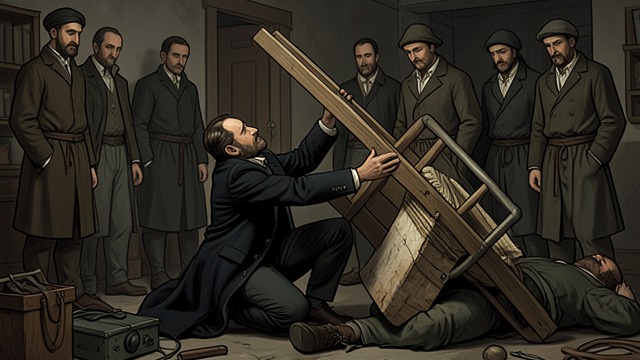
A Rescue Beneath the Cart
A choice in public
Old Fauchelevent is trapped under a fallen cart, and the bystanders hesitate to risk their safety. Monsieur Madeleine recognizes that waiting for equipment may leave the man crushed.
He gets beneath the cart and lifts it long enough for others to free the victim. The rescue reveals the physical strength that may expose his identity.
Goodness under suspicion
Javert recognizes in Madeleine a strength associated with the convict Jean Valjean. The act of mercy therefore increases the danger to the rescuer.
Valjean does not wait for his motives to be understood. The episode shows that compassion can require action before safety or reputation is secured.
A Child Taken from Cruelty
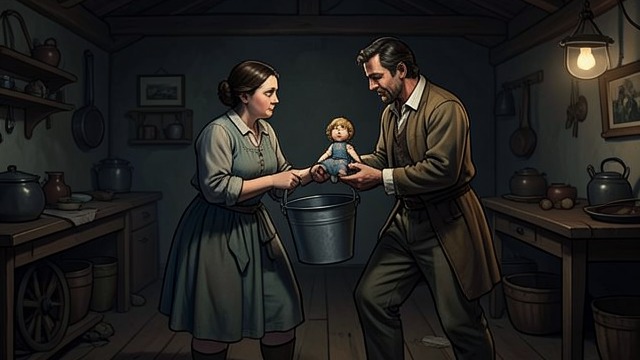
A Child Taken from Cruelty
Help without calculation
Jean Valjean sees Cosette carrying water and steps in to bear the bucket. At the inn, he protects her from punishment and gives her a doll.
He does not treat her as a burden or a means to another end. He arranges to take her away and gives her a chance to live without fear.
A promise carried forward
Valjean’s rescue fulfills the promise he made to Fantine at her deathbed. The care he once received from Bishop Myriel now becomes care offered to a child.
Mercy passes from one life to another, not as a rule enforced by authority but as a responsibility freely accepted.
Mercy for Javert
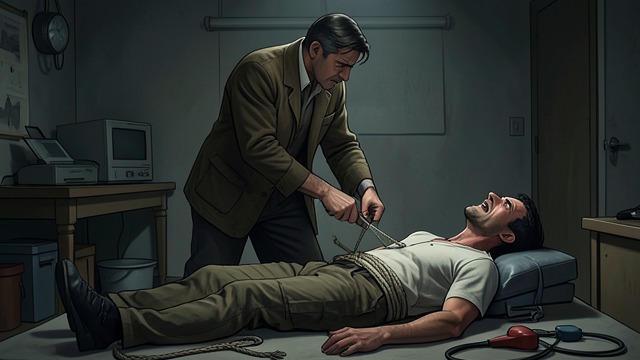
Mercy for Javert
The chance for revenge
Jean Valjean receives Inspector Javert as a prisoner while the insurgents prepare for the barricade’s fall. Javert has pursued Valjean for years and expects him to take vengeance.
Valjean cuts the ropes and tells Javert that he is free. He gives his address rather than using the moment to escape accountability.
Mercy destabilizes authority
Javert cannot fit the act into his conviction that a convict is irredeemable. The officer has been spared by the very man he believes society must restrain.
Valjean’s choice does not persuade Javert to change in a simple way. It makes his old moral certainties impossible to inhabit.
The Rescuer Recognized

The Rescuer Recognized
A debt uncovered
Marius learns that Jean Valjean carried him through the sewers after the barricade. He also discovers that Valjean had saved Javert and protected the young couple’s future.
The revelations overturn Marius’s earlier suspicion. What he had taken for a shameful past now appears as a life repeatedly given for others.
The gift returned
Marius and Cosette return to Jean Valjean and acknowledge his sacrifices. Their presence gives him a final experience of belonging after he had withdrawn in the belief that he was a danger to them.
Recognition cannot undo the years of suffering, but it completes the moral movement from isolation to relationship. Mercy is finally answered with gratitude and love.
October 1815, after Jean Valjean’s arrest
Around 1821, at Montreuil-sur-Mer
Christmas 1823, at Montfermeil
June 5, 1832, at the barricade
Near Jean Valjean’s death, in Paris
